
Thursday, April 11, 2019
Neuropoetry event at Barbican Library

Tuesday, April 2, 2019

Neural processes underlying second language (L2) acquisition
Language. It is the tool that we use to solve problems and advance culture through communicating knowledge, teaching and learning from others. What happens when we first learn a language? Early in life we appear to be able to differentiate between virtually all phonetic units in the languages of the world (1).
However, around the age of nine months, the infant brain adjusts to the continual exposure of the native language (L1) (2). Furthermore, after puberty there is an obvious decrease in the ability of an individual to acquire native-like proficiency of a second language (L2). The continuous process of neural commitment to the L1-specific speech patterns experienced early in life could account for the corresponding decrease in the ability to acquire another language later on in life (3).
For example, cross-sectional studies showed that while 6-8 months old English infants were able to distinguish between two Hindi consonant sounds to the same level as native Hindi adults, 10-12 months old infants had difficulty with this task. This result was also replicated when assessing vowel sounds (4, 5).
Does this mean that learning L2 later in life will limit your ability to attain native-like proficiency, and become fluent? Luckily, the answer appears to be no! Published findings found that some individuals who started learning L2 later in life reached native fluency. However, the alternative was also true; learning L2 early in life did not guarantee fluency (6, 7, 8). For example, a study, which compared the grammatical judgment of native English speakers, with that of Vietnamese people who had learned English early in life, found no difference in performance between groups (9). Despite this, the Vietnamese early learners of English also appeared to retain their native accent, which could thus be argued as not reaching native-like proficiency in the English language. One can therefore say that early exposure to a second language will not guarantee native-like proficiency.
In another study, native English speakers were asked to rate the English accent of speech samples that had been produced by Dutch individuals who started learning English around 12 years of age (8). Approximately half of the Dutch cohort was mistaken for native English speakers, suggesting that it is possible for late L2 learners to attain pronunciation akin to native speakers. This finding was further supported by a study in which individuals from all over the world (Russia, Bulgaria, USA to name a few) were assessed on their Hebrew accent. The study found that the age at which individuals learnt L2 (in this case Hebrew) was not directly correlated to perceived native-like accent (10). Thus, an early start in learning L2 is not a prerequisite in acquiring unaccented speech.
There is also physiological evidence, which has been published to support this concept. A group of adult participants were trained on an artificial language, and exhibited a similar pattern of brain activity to that observed in native speakers when they process their first language (11). Furthermore, there appeared to be little difference in brain activity when a syntactic violation, or language error, was processed. Both groups exhibited a double peak of brain activity, termed early negativity and late positivity (N400 and P600), when a syntactic error was encountered. Essentially, the automatic detection and correction of such errors during language processing, is similar between native speakers and L2 individuals.
This indicates that both early and late learners of a language make use of the same brain mechanisms during the processing of language. Further supporting evidence is provided by other event-related brain-potential (ERP) studies. It has been shown that both the brain areas activated (15), and ERP patterns evoked in fluent L2 users, are largely observed in native speakers as well (12, 13). Difference in these parameters were revealed, however, when native and non-proficient speakers’ processing was compared (14, 16).
The evidence that we retain our ability to learn speech in different languages over the course of life is good news for all of us who recently thought of taking up a second language. No matter your age, or which language you are hoping to learn, you can become a fluent L2 speaker if the ideal learning environment is created. Thus, when you train yourself intensively in perceiving and producing the sounds of the second language, show the motivation and enthusiasm to sound native-like, along with massive L2 exposure, it will be possible for you to achieve your aim of becoming a fluent L2 speaker.
References
1. Kuhl, P. K., Conboy, B. T., Coffey-Corina, S., Padden, D., Rivera-Gaxiola, M., & Nelson, T. (2008). Phonetic learning as a pathway to language: New data and native language magnet theory expanded (NLM-e). Philosophical Transactions of the Royal Society B, 363, 979-1000.
2. Johnson, J.S., & Newport, E.L. (1989). Critical period effects in second language learning: the influence of maturational state on the acquisition of English as a second language, Cognitive Psychology, 21, 60-99.
3. Kuhl, P.K. (2004). Early language acquisition, Cracking the speech code. Nature Reviews Neuroscience, 5, 831-843.
4. Werker, J. F., & Tees, R. C. (. (1984a). Cross-language speech perception: Evidence for perceptual reorganization during the first year of life. Infant Behavior and Development, 7, 49-63.
5. Werker, J. F., & Lalonde, C. E. (1988). Developmental Psychology, 24, 672-683.
6. Birdsong, D. (1999). Introduction: Whys and why nots of the critical period hypothesis for second language acquisition. In D. Birdsong (Ed.), Second language acquisition and the critical period hypothesis (pp. 1-22). Mahwah, NJ: Erlbaum.
7. Birdsong, D. (2006). Age and second language acquisition and processing: A selective overview. Language Learning, 56, 9-48.
8. Bongaerts, T. (1999). Ultimate attainment in L2 pronunciation: The ease of very advanced late L2 learners. In D. Birdsong (Ed.), Second language acquisition and the critical period hypothesis (pp.133-149). Mahwah, NJ. Erlbaum.
9. McDonald, J.L. (2000). Grammaticality judgments in a second language: Influences of age of acquisition and native language. Applied Psycholinguistics, 21, 395-423.
10. Abu-Rabia, S., & Kehat, S. (2004). The critical period for second language pronunciation: Is there such a thing? Ten case studies of late starters who attained a native-like Hebrew accent. Educational Psychology, 24, 77-98.
11. Friederici, A.D., Steinhauer, K., & Pfeifer, E. (2002). Brain signatures of artificial language processing: Evidence challenging the critical period hypothesis. Proceedings of the National Academy of Sciences, 99, 529-534.
12. Hahne, A., & Friederici, A. D. (2001). Processing a second language: Late learners’ comprehension mechanisms as revealed by event-related brain potentials. Bilingualism: Language and Cognition, 4, 123-141.
13. Steinhauer, K., White, E.J., & Drury, J. (2009). Temporal dynamics of late second language acquisition: evidence from event-related brain potentials. Second Language Research, 25, 13-41.
14. Ojima, S., Nakata, H., & Kakigi, R. (2005). An ERP study of second language learning after childhood: Effects of proficiency. Journal of Cognitive Neuroscience, 17, 1212-1228.
15. Perani, D., Paulesu, E., Sebastian-Galles, N., Dupoux, E., Dehaene, S., Bettinardi, V., et al. (1998). The bilingual brain: Proficiency and age of acquisition of the second language. Brain, 121, 1841-1852.
16. Dehaene, S., Dupoux, E., Mehler, J., Cohen, L., Paulesu, E., Perani, D., et al. (1997). Anatomical variability in the cortical representation of first and second language. NeuroReport, 8, 3809-3815.
Wednesday, March 27, 2019
Promoting Neuropoetry during Brain Awareness Week
During Brain Awareness Week I had a great time promoting the idea of neuropoetry, having conversations with many different people about my book 'Multilingual Neuropoetry' and signing my first copies. The week was off to a good start when the 'RainbowPoem', a poem type that I had invented, was featured in the Phenotype magazine in their HT19 issue! This was the first time this new poem form appeared in print.


My first stop during Brain Awareness Week was East Acton Primary School where I introduced 8-9 year old children to neuropoetry in two hands-on sessions. It was an amazing experience to see how everyone was challenging themselves to pen a poem on what they found most fascinating about the brain and that they were excited to share with others.
I then had the pleasure later that day to talk about this exciting experience on Radio Harrow at the 'Harrow Today' show while launching my book and discussing it in more depth. You can listen to the interview here. Later that week I held the first neuropoetry workshops in Havering on 16th March in Romford Central and Hornchurch Libraries where I sold my very first copy, which as an author was a special experience. On 5th April, I'll be holding a lunch hour talk and workshop on neuropoetry at Barbican Library between 12:30-13:30 where I hope to see you there!

Tuesday, March 12, 2019
Launching Multilingual Neuropoetry During Brain Awareness Week At Radio Harrow and in London
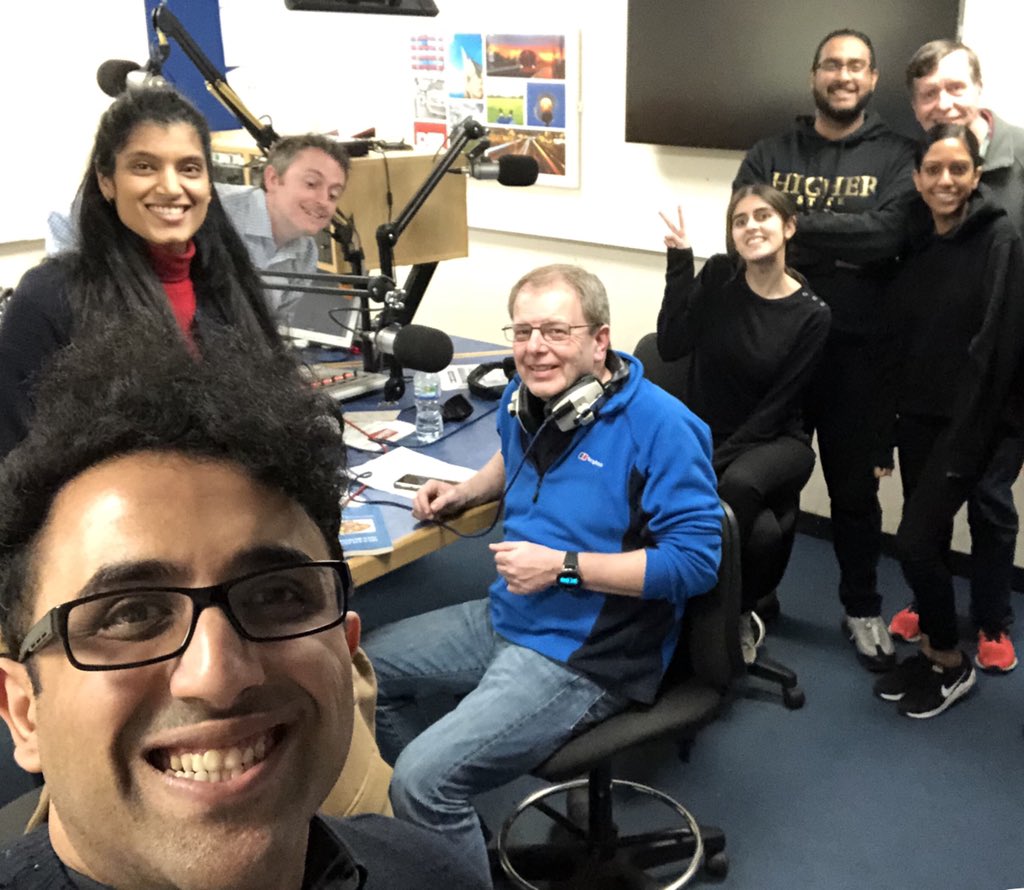

Extremely honoured to have been guest at Radio Harrow and been interviewed by the lovely Tuesday Team of Harrow Today. To listen to our conversation where I discuss my book 'Multilingual Neuropoetry', please go to http://listenagain.radioharrow.org/

To learn practically how to create neuropoems, please join me in the following
neuropoetry workshops that I will be holding during Brain Awareness Week and beyond:
16th March: Neuropoetry Workshop during Brain Awareness Week at Romford Central Library, 10:30-11:30, London. Everyone welcome!
16th March: Neuropoetry Workshop during Brain Awareness Week at Hornchurch Library, 14:00-15:00, London. Everyone welcome!
5th April: Barbican Library: Lunch hour talk and workshop, 12:30-13:30,
London. Everyone welcome!
Monday, March 11, 2019
Multilingual Neuropoetry

Monday, March 4, 2019
Happy to announce that the first book on poetry on neuroscience in multiple languages is now available here!

This book will be launched during Brain Awareness Week on 12th March when I will be discussing it on 'Harrow Today' at Radio Harrow between 21:00-22:00. Listen live at http://www.radioharrow.org/!
Subscribe to:
Posts (Atom)
Schreiben in anderen Sprachen
Wollt Ihr eine Geschichte lesen, die Euch in eine andere Welt versetzt? Habt Ihr Interesse daran eine Geschichte zu lesen, bei der Ihr Eure ...

-
 Today a review of my book 'Multilingual Neuropoetry' was published by the magazine of the British Psychological Society known as The...
 -
The article 'The Expanded Natural History of Song Discography, A Global Corpus of Vocal Music' has now been published in OpenMind an...
-
Language. It is the tool that we use to solve problems and advance culture through communicating knowledge, teaching and learning from othe...
